


Japan’s relationship with the Association of Southeast Asian Nations is almost at the half-century mark — a point that is also almost one decade short of ASEAN’s own 60th anniversary.
Various geopolitical uncertainties regionally and globally may remain as issues of general concern, but Japan and its Southeast Asian partners nonetheless continue to cooperate in a wide range of areas.
Though many of the nations that comprise the ASEAN collective have long been viewed as “emerging markets,” by the standards of some observers, this is no longer the case. Southeast Asian nations are not merely emerging — they have emerged, and in many cases they are now seen as investment destinations.
Both the Japanese government and Japanese companies continue to see ASEAN member states as a direct investment target. In line with their mutual interests, the areas that have been attracting Japanese attention in those states include energy transition, the issue of how to manage supply chains, and economic resilience.

Energy transition alliance
The shift from fossil fuel-based systems of energy production and consumption to ones based on renewables is core to the energy plans of both Japan and ASEAN. The Japanese government outlined in its 7th Strategic Energy Plan of February 2025 that, “Given Japan’s unique circumstances, such as a lack of natural resources, mountainous land and being surrounded by deep oceans … we will maximize the use of renewable energy as our major power source and we will aim for a balanced power generation mix that does not excessively depend on specific power sources or fuel sources.”
In a somewhat similar vein, ASEAN’s Centre for Energy has highlighted that “Renewable energy is crucial in ensuring energy security by diversifying the region’s energy supply, supporting sustainable development goals and climate efforts under the Paris Agreement.” It adds, that to realize ASEAN’s renewable energy potential, “clear policies are catalyzing investment, including foreign direct investment. Expanding renewable energy development will accelerate economic and technological advancement and reinforce a sustainable development pathway.”
Toward that end, ASEAN members have been seeking out opportunities for collaboration with other nations to “encourage energy transition alongside international cooperation to advance climate actions.” Several initiatives are being pursued along those lines in which Japan is partnering with various ASEAN states. One example is the memorandum of cooperation that Cambodia and Japan signed with the goal of broadening their climate collaboration.
The agreement outlines several priority areas, including expanding the joint credit mechanism and biomass projects, as well as promoting biodegradable products and enhancing national park management. Above all, central to the agreement is being able to modernize Cambodia’s waste management infrastructure using advanced Japanese incineration technology.
Another example is the Energy Sustainability and Climate Change Cooperation Framework, which Singapore and Japan agreed to in March, to accelerate decarbonization, achieve climate goals and reach net-zero emissions. Intended to strengthen bilateral cooperation in clean energy and climate-related initiatives, the framework calls for expanded collaboration in such key areas as cross-border electricity imports and carbon capture, utilization and storage. The initiative also calls for policy exchanges, business facilitation and financial collaboration, and both parties will aim to encourage industry players and financial institutions to invest in low-carbon energy projects.
Finally, akin to the Cambodia initiative, Indonesia and Japan also took the opportunity in March to expand their own partnership, in part to encourage energy transition in the ASEAN state. Japan has already made considerable investments toward developing Indonesia’s automotive industry, and Jakarta now hopes that the Japanese industry will help its Indonesian counterpart with accelerating the transition to more environmentally friendly fuels. The partners also hope to continue collaborating on advancing new and renewable energy projects, with work already underway in different parts of Indonesia on a geothermal power plant, a waste-to-energy project and a hydroelectric power plant.
Managing supply chains
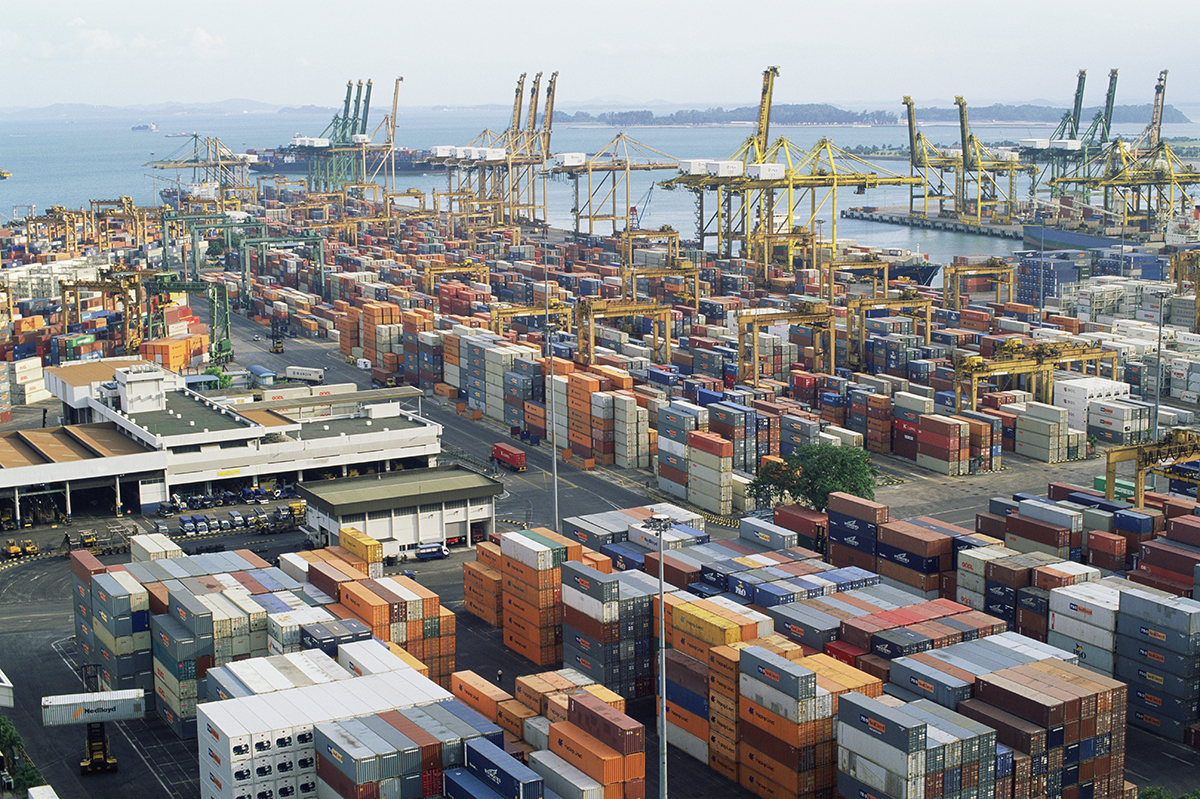
Another aspect of Japan’s expanded partnership with Indonesia is the latter’s expectation that the support given to its automotive industry will also help to strengthen the supply chains of both countries. As argued in 2025 by a team of scholars from Vietnam, ASEAN has come to “serve as a crucial link in Japan’s global supply chains, providing raw materials and intermediate products while benefiting from Japanese technology and investment.”
Indonesia has been particularly important in this regard, owing to its natural resources — its large nickel reserves with their automobile battery uses are a major factor behind the country’s importance to Japan’s own supply chains.
Japan has been trying to shift some its supply chains toward Southeast Asia for several years now. Toward that end, in the wake of the disruptions caused particularly by ongoing conflicts in the Middle East and the impacts that they are having on supply chains in ASEAN states, in April Japan announced it would offer about $10 billion in support to help these Asian countries to procure energy resources.
Speaking after a conference on zero-emissions issues with ASEAN leaders in attendance, Prime Minister Takaichi Sanae was quoted as saying: “We are closely interconnected with Asian countries through supply chains and other channels, and we are mutually dependent. … Supporting Asian countries’ supply chains would in turn bolster Japan’s own economy.”
Such moves were furthered in June this year when, at a high-level ministerial meeting in Tokyo, Japan and ASEAN agreed to upgrade their economic partnership. A key component of this will be to enhance the robustness of supply chains. Considering the disruptions elsewhere in the world, the two parties in their agreement committed to building more secure supply networks for critical technologies and medical supplies.
The hope, they say, is that this will provide businesses with greater operational predictability, reducing the risks associated with supply chain bottlenecks. They also plan to pursue joint initiatives to monitor supply chain vulnerabilities. The goal of such efforts is to mitigate the impact of future global shocks on the partners’ domestic markets and enhance the overall economic stability of the region.
Higher economic resilience
Finally, related to the issue of securing supply chains is that of enhancing economic resilience. The Europe-based think-tank Zoe Institute for Future-fit Economies defines economic resilience as “an economy’s ability to swiftly resume its core functions when impacted by a crisis, thereby minimizing the duration during which it is unable to fulfill its core functions.”
Japan and ASEAN have had a joint Economic Resilience Initiative in place since 2020, which was prompted by the outbreak of the Covid-19 pandemic. The document defining its parameters cited three basic objectives: sustaining the close economic ties developed by ASEAN and Japan; mitigating the adverse impact of the pandemic on the economy; and strengthening economic resilience. On the latter point, in addition to supply-chain management, the document called for building capacity for emergency preparedness, strengthening networks and exploring public-private collaborations in strategic sectors.
As already noted, the times since then have brought new crises to the fore. In March, a symposium organized in Tokyo by the Economic Research Institute for ASEAN and East Asia discussed the topic of how to further the partnership in this area of economic resilience. Attended by senior policymakers and experts from Japan and ASEAN states, the presentations and subsequent panel discussions outlined several specific strategic sectors to be explored for cooperation.
In addition to the two areas of energy transition and supply chain management already discussed, they brought up other fields including human capital development, digital transformation and such emerging technologies as artificial intelligence, quantum technology and next-generation semiconductors.
In times of global uncertainty, it is crucial for nations to build strong partnerships that support one another’s resilience and sustainability. By working together, Japan and its allies in ASEAN strive to react efficiently to global changes and to safeguard stability and prosperity throughout the region.
Download the PDFs of this special


